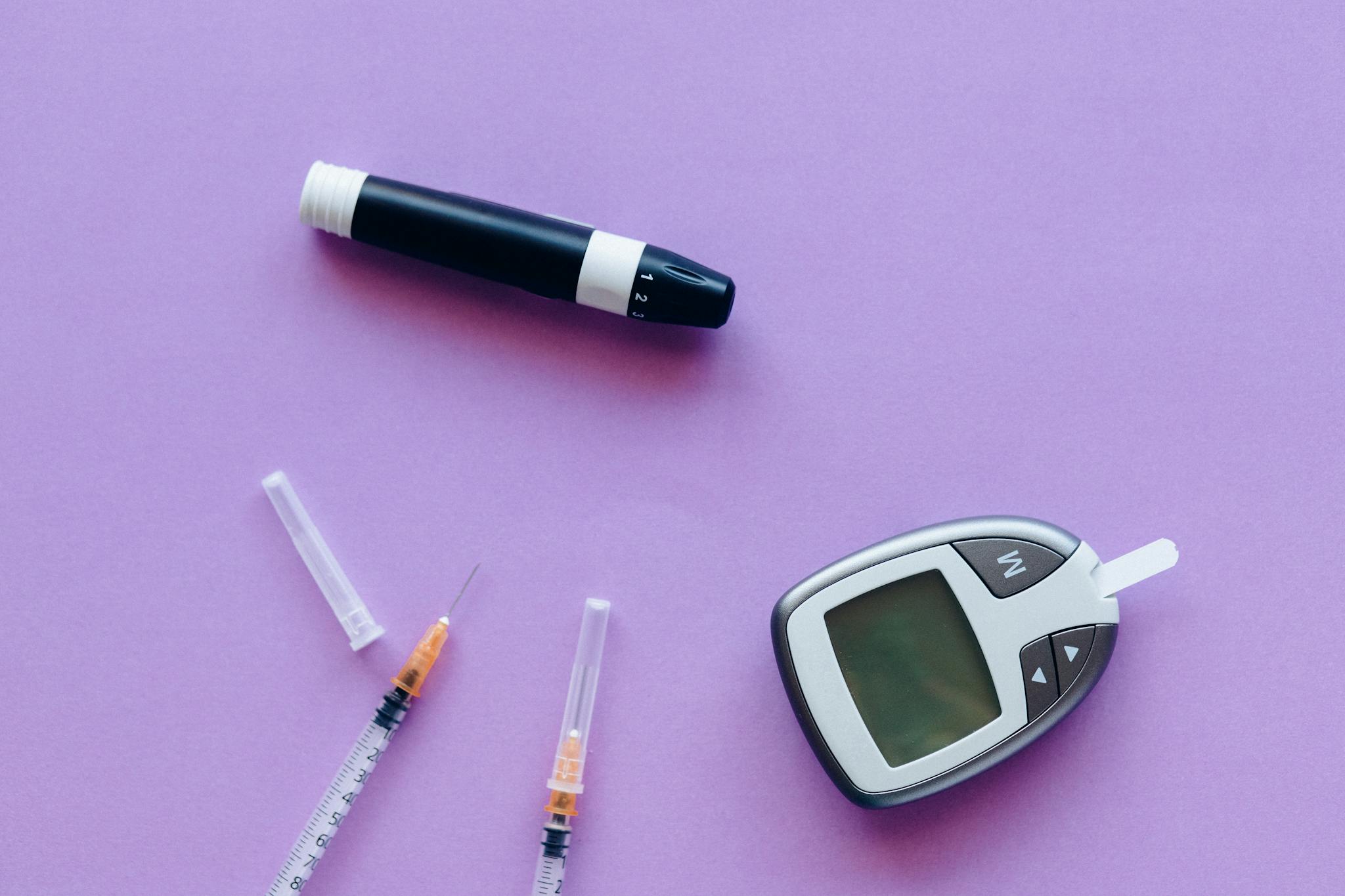

Understanding Insulin Resistance in Plain English
Insulin resistance is one of the most talked-about topics in metabolic health, and one of the most misunderstood.
You may have heard it mentioned in relation to Type 2 diabetes, weight gain, belly fat, PCOS, or even fatigue. But for many people, it remains an abstract medical term that sounds serious without being fully understood.
So let’s strip away the jargon.
Let’s explain what insulin resistance actually is, what it is not, and why it matters – in plain English.
What Is Insulin Supposed to Do?
Insulin is a hormone produced by the pancreas. Its primary job is to help move glucose (sugar) out of the bloodstream and into cells where it can be used for energy.
Think of insulin as a key.
When you eat, carbohydrates are broken down into glucose and enter the bloodstream. Insulin is released and acts like a key that unlocks the door to your cells, allowing glucose to enter.
In a metabolically healthy system:
- Blood sugar rises slightly after eating.
- Insulin is released.
- Cells respond appropriately.
- Glucose is cleared efficiently.
- Blood sugar returns to baseline.
This process is tightly regulated and remarkably effective when insulin sensitivity is intact (Petersen & Shulman, 2018).
So What Is Insulin Resistance?
Insulin resistance occurs when the “lock” on the cell door stops responding properly to insulin’s “key.”
The pancreas still releases insulin.
But the cells don’t respond efficiently.
As a result, the body compensates by producing more insulin in order to force glucose into cells.
Over time, this compensation leads to chronically elevated insulin levels, a condition known as hyperinsulinemia, even before blood sugar levels become dramatically abnormal (DeFronzo, 2009).
Eventually, the pancreas struggles to keep up with demand. Blood glucose begins to rise. This progression is central to the development of Type 2 diabetes (DeFronzo, 2009).
Why Does Insulin Resistance Develop?
Insulin resistance does not appear overnight.
It develops gradually and is influenced by several factors:
- Chronic excess calorie intake
- Frequent high carbohydrate load
- Sedentary lifestyle
- Poor sleep
- Chronic stress
- Genetic predisposition
At the cellular level, excess nutrient availability, particularly in the context of overnutrition, can interfere with insulin signaling pathways (Petersen & Shulman, 2018).
In simple terms:
When the body is constantly flooded with energy it doesn’t need, it becomes less responsive to the hormone designed to manage that energy.
Why Insulin Resistance Matters (Even Before Diabetes)
Many people believe insulin resistance only matters once blood sugar becomes “diabetic.”
But insulin resistance often exists years before that point.
During this early stage:
- Fasting glucose may still appear “normal.”
- A1C may still look acceptable.
- Standard labs may not flag an issue.
Meanwhile, insulin levels may already be elevated.
Chronically elevated insulin promotes fat storage, particularly around the abdomen, and contributes to inflammation and metabolic dysfunction (DeFronzo, 2009).
This is why someone can feel:
- Constantly hungry
- Tired after meals
- Struggling to lose weight
- Prone to belly fat accumulation
Even if their blood sugar isn’t yet in diabetic range.
What Insulin Resistance Is Not
It is not a moral failure.
It is not caused by one dessert.
It is not fixed by one workout.
It is not reversed by panic.
It is a physiological adaptation to repeated metabolic stress.
And physiology responds best to structured correction – not extremes.
The Faithfully Fit Strategy for Improving Insulin Sensitivity
Improving insulin sensitivity requires consistency and rhythm.
Not random restriction.
Not metabolic chaos.
Here are foundational strategies supported by metabolic research:
1. Increase Skeletal Muscle Activity
Muscle tissue is one of the primary sites for glucose disposal. Resistance training and regular movement improve insulin sensitivity by increasing glucose uptake independent of insulin (Petersen & Shulman, 2018).
Translation: Muscle is metabolically protective.
2. Stabilize Protein Intake
Adequate protein supports muscle maintenance and improves satiety, reducing the likelihood of glucose spikes from excessive carbohydrate intake.
3. Improve Sleep Duration and Quality
Sleep restriction has been shown to reduce insulin sensitivity and impair glucose tolerance (Spiegel et al., 1999).
Even modest improvements in sleep can positively influence metabolic markers.
4. Reduce Meal Frequency if Appropriate
Constant grazing keeps insulin elevated. Structured meal timing allows insulin levels to fall between meals, promoting metabolic flexibility.
5. Incorporate Post-Meal Walking
Even short bouts of moderate walking after meals improve glycemic control (DiPietro et al., 2013).
These interventions are not dramatic.
But they are effective.
A Faith Perspective on Insulin Resistance
It can be discouraging to learn that insulin resistance may have been developing for years before symptoms appeared.
But discouragement does not produce healing.
Stewardship does.
Scripture reminds us:
“Let us not grow weary in doing good, for in due season we will reap, if we do not give up.” (Galatians 6:9).
Metabolic health is rarely repaired in weeks.
It is restored through daily faithfulness to small, structured decisions.
Your responsibility is consistency.
The timeline is not yours to force.
Where to Begin
If you suspect insulin resistance may be affecting your health, begin with clarity, not overwhelm.
Choose one structured intervention:
- Lift weights twice this week.
- Add protein to breakfast.
- Walk for 10 minutes after dinner.
- Go to bed 30 minutes earlier.
Consistency in one area often improves others.
Insulin resistance develops gradually.
And it improves gradually.
But it does improve.
References
DeFronzo, R. A. (2009). From the triumvirate to the ominous octet: A new paradigm for the treatment of type 2 diabetes mellitus. Diabetes, 58(4), 773–795. https://doi.org/10.2337/db09-9028
DiPietro, L., Gribok, A., Stevens, M. S., Hamm, L. F., & Rumpler, W. (2013). Three 15-minute bouts of moderate post-meal walking significantly improve 24-hour glycemic control in older people at risk for impaired glucose tolerance. Diabetes Care, 36(10), 3262–3268. https://doi.org/10.2337/dc13-0084
Petersen, M. C., & Shulman, G. I. (2018). Mechanisms of insulin action and insulin resistance. Physiological Reviews, 98(4), 2133–2223. https://doi.org/10.1152/physrev.00063.2017
Spiegel, K., Leproult, R., & Van Cauter, E. (1999). Impact of sleep debt on metabolic and endocrine function. The Lancet, 354(9188), 1435–1439. https://doi.org/10.1016/S0140-6736(99)01376-8